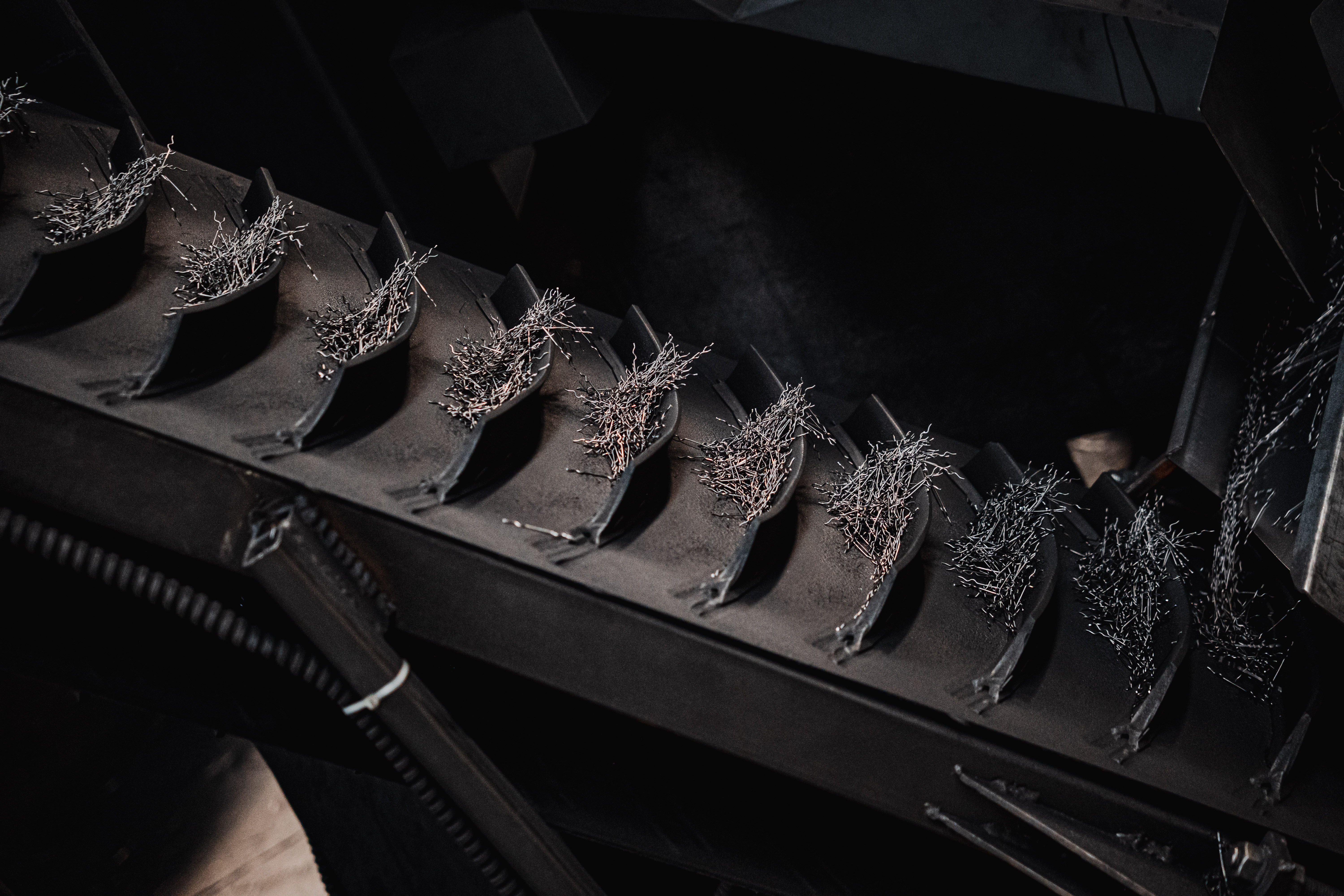
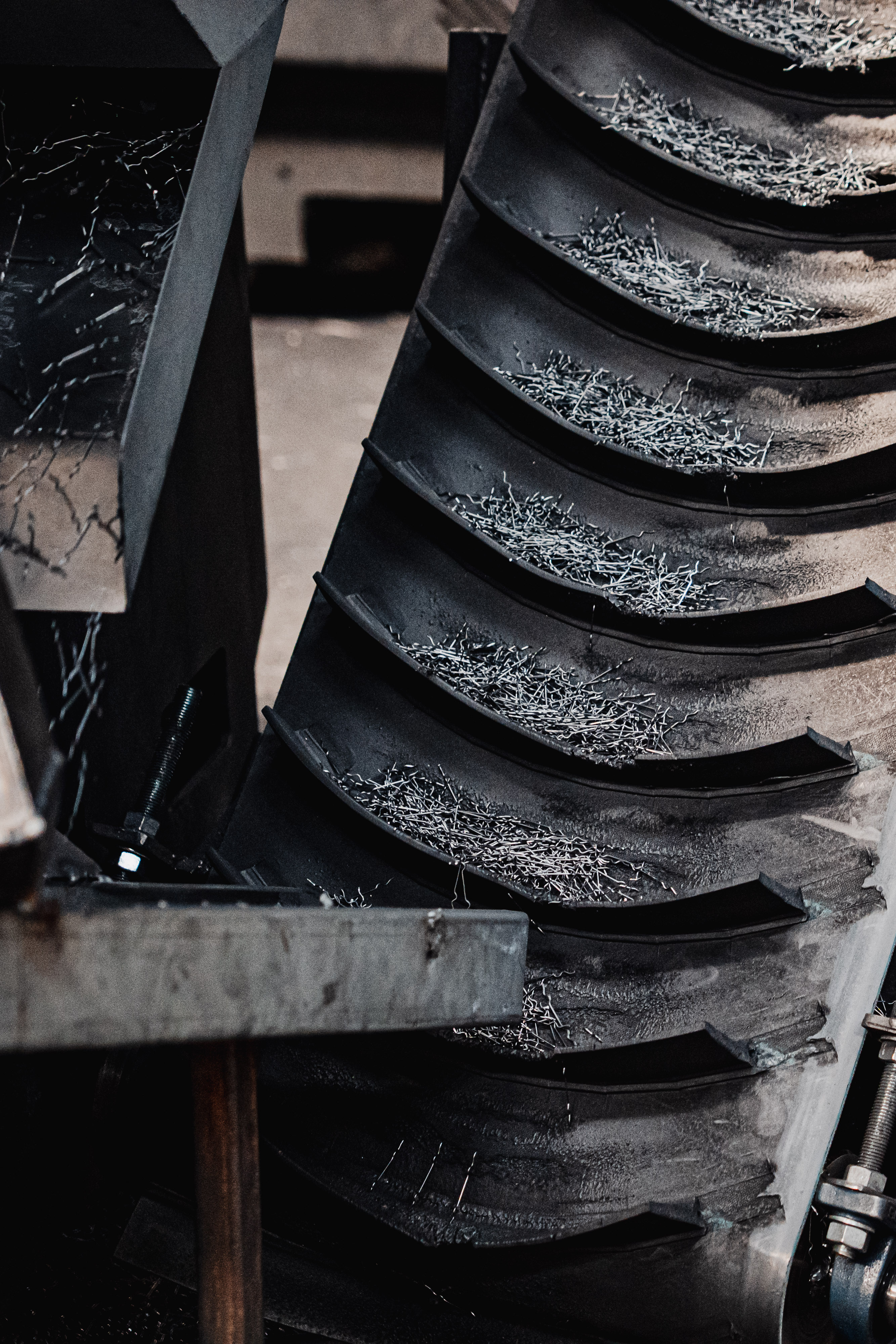
Not all steel fibers behave the same under load. The difference lies in the geometry of each wire, the way it anchors itself in the concrete mass when a crack begins to open and tries to pull it out.
The Double-hook hybrid technology brings a three-dimensional anchoring geometry, designed to distribute the pull-out force over multiple contact points with the surrounding concrete, not just on the ends of the fiber. In practical terms, the fiber achieves stronger mechanical interaction with the concrete matrix, which can improve pull-out resistance and performance under dynamic loading.

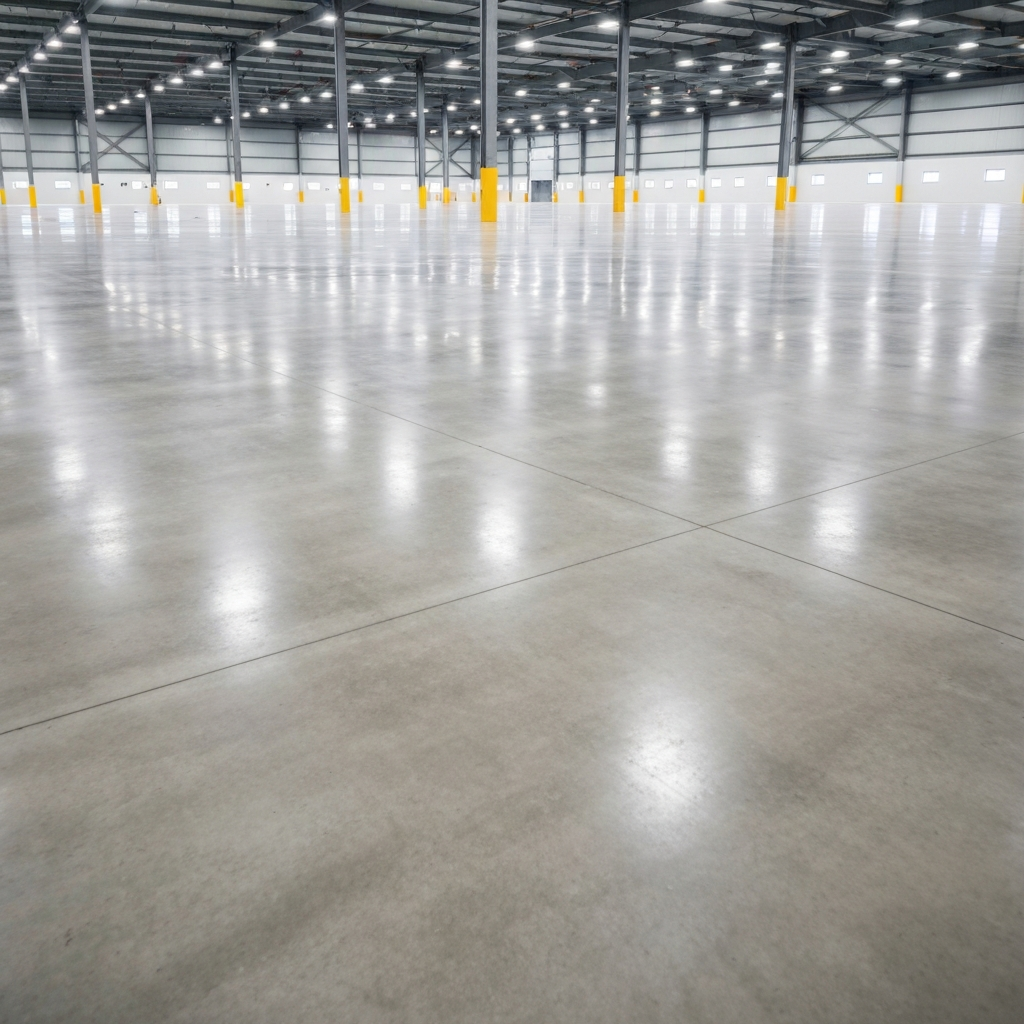
This feature becomes relevant especially in infrastructure projects where loads are not constant, but repeated and variable: port platforms hit by heavy traffic loads, industrial roads with repeated passages of machinery, or areas where traffic vibrations are constantly transmitted into the concrete slab. In these conditions, a fiber with superior anchoring makes the difference between a floor that lasts for years without intervention and one that requires frequent repairs.
Choosing the right type of fiber, Hooked-end or Double-hook hybrid, depends on the specific demands of each project, including slab thickness, loading conditions, and expected traffic. The Fibro Metals technical team recommends the right type after a specific discussion about the real conditions on site, not following a universal recipe.