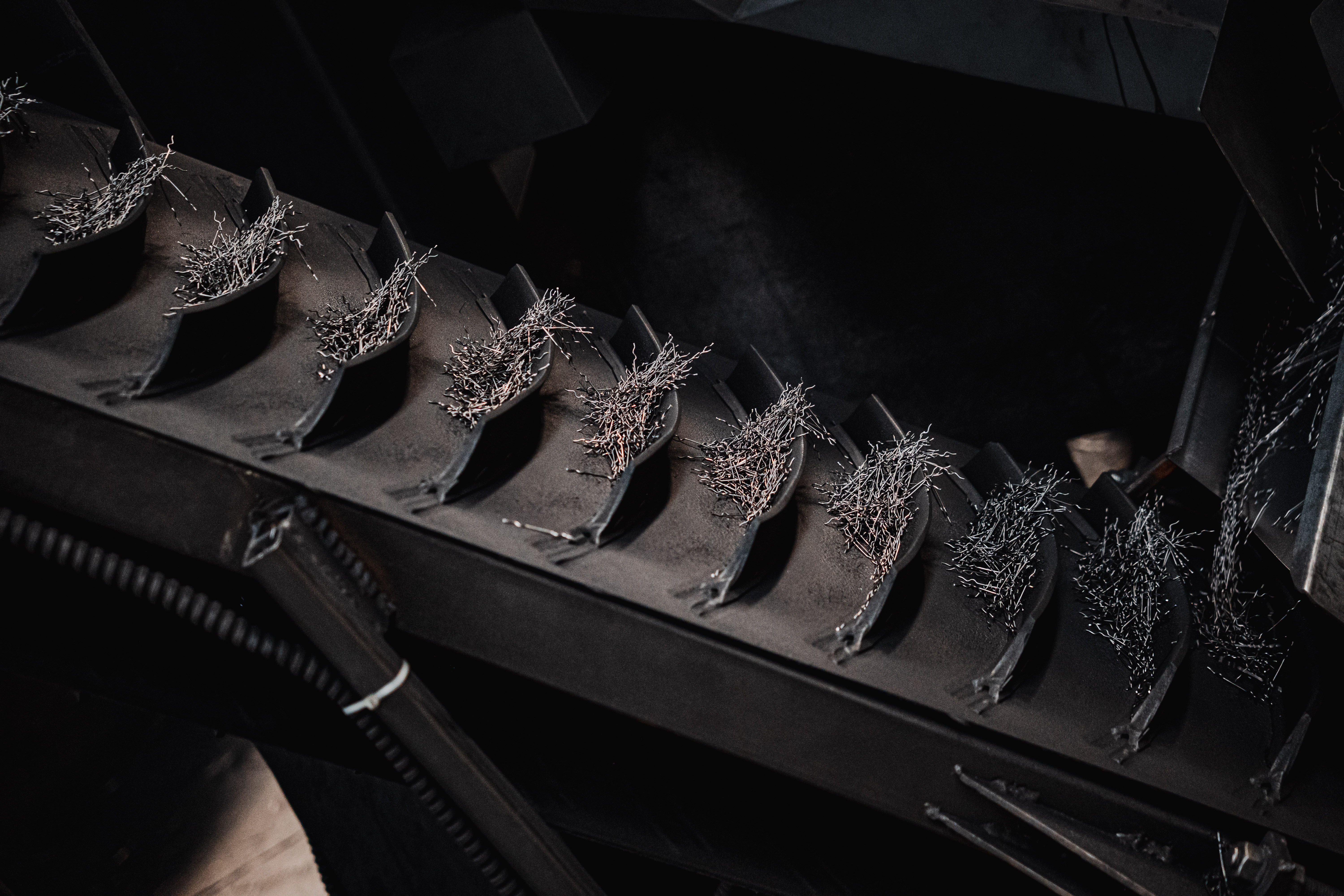
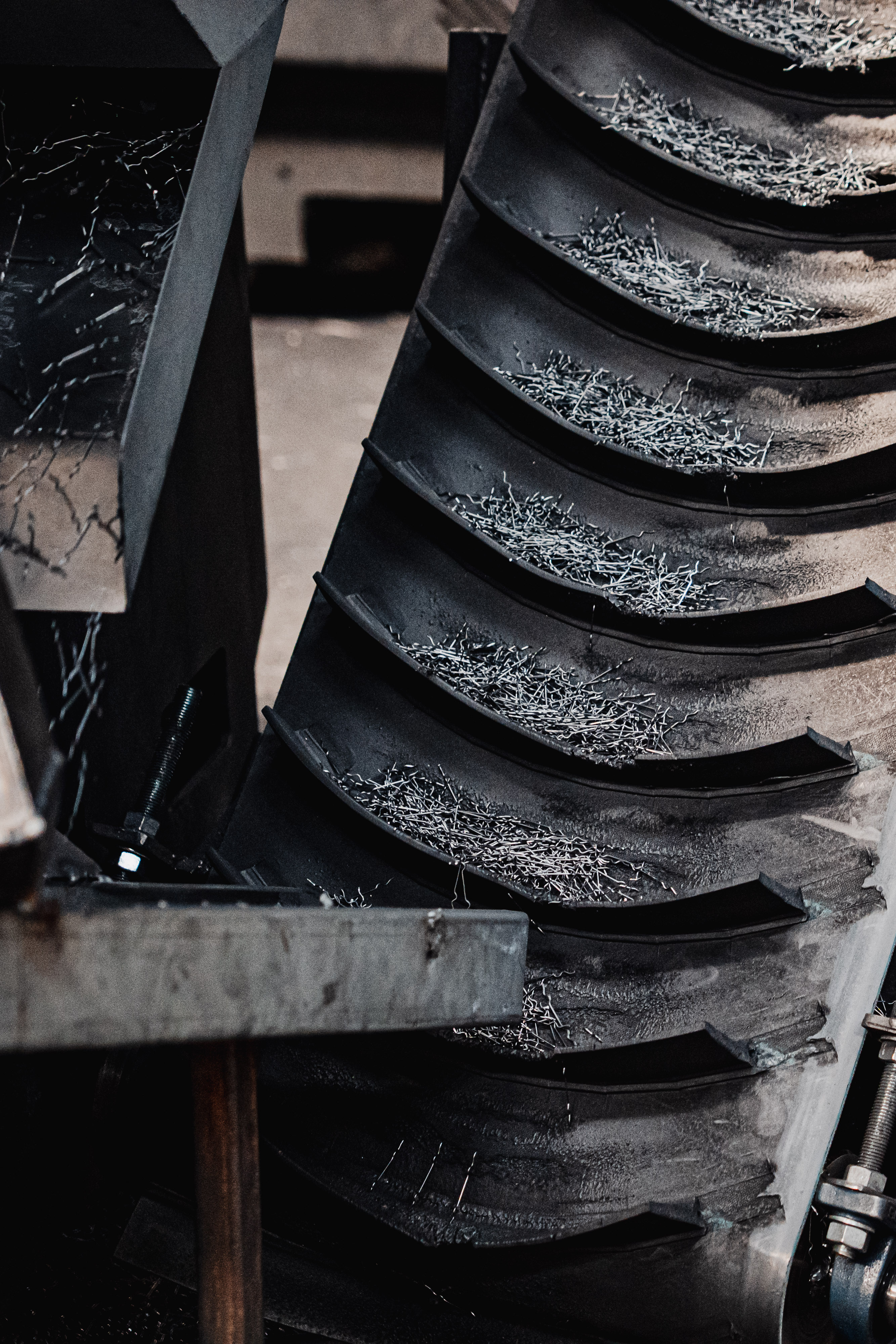
Underground works, road and railway tunnels, or mining galleries, put engineers in a difficult situation right from first step: how do you reinforce a wall of freshly applied concrete on an irregular rock surface, in a space where you can't even stand comfortably?
The industry's answer in recent decades has been Steel Fiber Reinforced Shotcrete (SFRS). Instead of manually mounting a wire mesh on the excavated surface, which is slow, dangerous and hard to do correctly in a tunnel, the steel fiber is added directly to the concrete mix before it is sprayed under pressure onto the gallery walls.
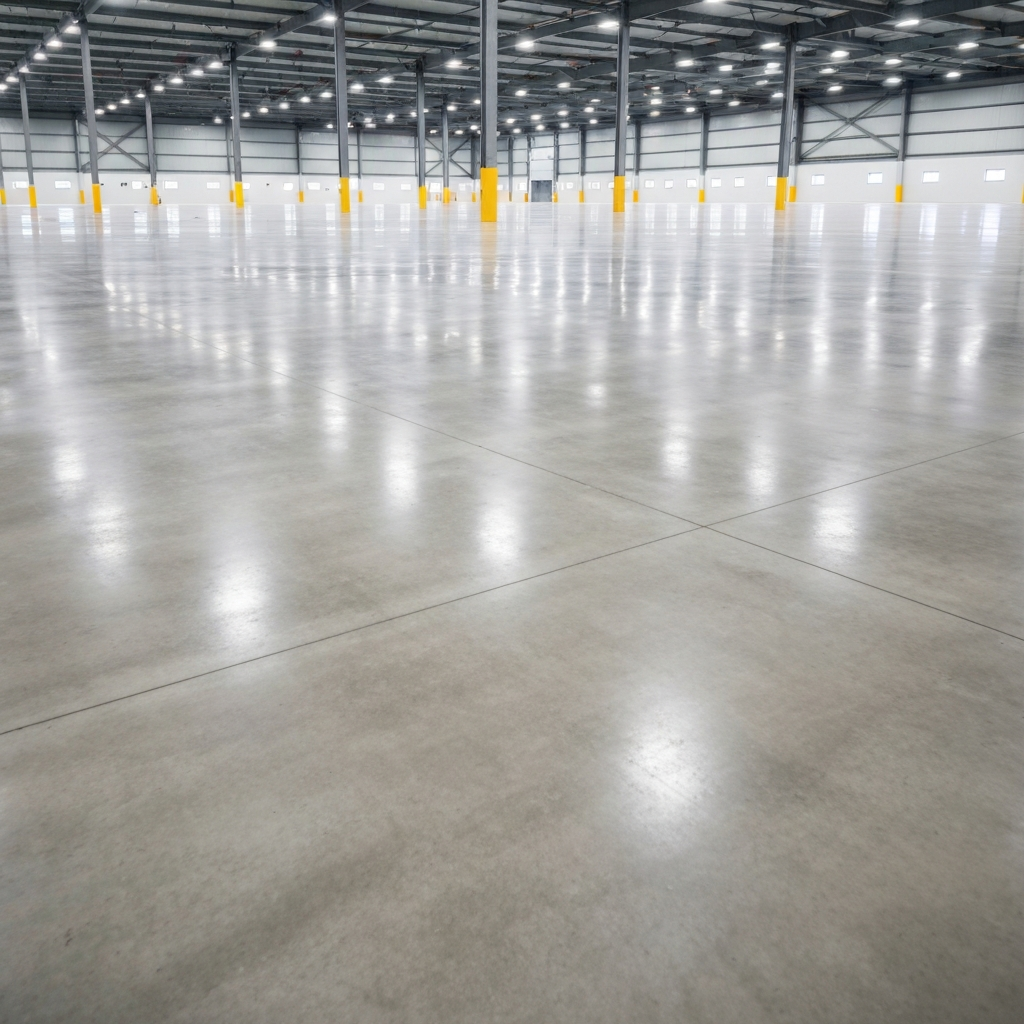
The result is an initial lining applied much faster, without workers exposed for long periods under an unconsolidated rock ceiling, and with a post-cracking resistance superior to plain concrete. The fibers, distributed three-dimensionally throughout the concrete matrix, continue to carry loads after the first microcracks appear, reducing the risk of sudden detachment of concrete fragments, which can pose a serious hazard in underground environments.
Fibro Metals keeps Group I fibers in stock, as this type is frequently requested for industrial floors and underground works, where tunneling projects often require immediate availability of materials. As excavation progresses, fiber needs to be available when required, rather than after several weeks.
Among the projects where Fibro Metals fiber was used are the Daneș Tunnel, near Sighișoara, Romania, and underground works associated with the HS2 project at Manhattan Business Park in England, two concrete examples that the technology works on a real scale, not just in the laboratory.